View Cart 
 

History

Ever since the middle of the 19th century citric acid has been industrially refined and is used increasingly as a natural flavouring, antioxidant, acid regulator and binding agent. At first, it was particularly extracted on Sicily through refining citrus fruit.

From 1916 the Louvain student Alphonse Cappuyns was working ardently on the biological production of citric acid.
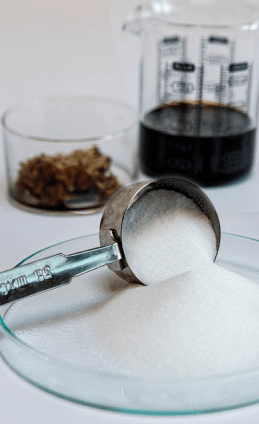
He first had randomly chosen bio-organisms (cytomyces) react with refined sugar. Later, he began using the Aspergillus Niger fungus. This proved to be a lucky hit.
From then on, it was possible to engage in the lucrative production process.
Hence, the establishment, in 1929, of the Belgian-Italian company La Citrique Belge.

Fabric 1940

By combining the Belgian savvy of fermentation with the Italian knowledge of refinery, production and profitability grew apace.
Even more so, when in 1947 sugar was replaced by the cheaper raw material molasses.
Cappuyns then took over all Italian shares and further expanded production.
Moreover, the coal-fired boilers were converted to the use of oil, which was much cleaner.
In addition, the mycelium was reclaimed from the waste and sold as feed under the brand name Citrocol.

By the end of the 1960s and in the early 1970s the Cappuyns family became aware that their private company lacked the necessary funds to operate effectively in the global market. Hence, in 1977 the company was taken over by Hoffmann-La Roche.
Hoffman-La Roche invested both additional capital and technological and managerial know-how in Citrique Belge, more than doubling its production capacity.

In 2003 DSM took over the vitamin division of Roche, including Citrique Belge.
Ever since, our company has been a part of a strong concern that increasingly focuses on food products and pharmaceutical additives.
In 2010 Citrique Belge was acquired by Adcuram.
 
Top


Print this page

Alphonse Cappuyns

Cappuyns

QuickLinks